- Restaurant Locations
- Videos
- Latest News
- Book Now
- Subscribe
- Discover Italy

Among the Highest Mountains in Europe
When people imagine Italy, they often picture Mediterranean coastlines, vineyards and sun-filled piazzas. Travel to Italy’s far northwest, however, and the landscape changes dramatically. Welcome to Valle d’Aosta, Italy’s smallest region and one of its most spectacular.
Surrounded by the high mountains of the Italian Alps, Valle d’Aosta borders France and Switzerland and is home to some of Europe’s greatest peaks. Here, Alpine scenery, historic castles, mountain villages and a distinctive food culture reveal an entirely different side of Italy.
Mountains define Valle d’Aosta. The region is surrounded by famous Alpine peaks including Monte Bianco (Mont Blanc), Monte Cervino (the Matterhorn) and Monte Rosa. Monte Bianco rises to more than 4,800 metres on the French-Italian border and dominates the landscape around Courmayeur.
Further south lies Gran Paradiso, another peak above 4,000 metres and the centrepiece of Gran Paradiso National Park. These high mountains are not simply a beautiful background. For centuries they have influenced how people travel, build their homes, farm, preserve food and live through long Alpine winters.
Today, the mountains attract visitors for skiing, hiking, climbing and extraordinary views, but Valle d’Aosta has retained a strong regional identity shaped by life at altitude.
Aosta: Roman History in the Alps
At the heart of the region is Aosta, a small city with an impressive Roman past. Known in Roman times as Augusta Praetoria, Aosta still contains remarkable reminders of its history, including the Arch of Augustus, Roman theatre remains and the ancient Porta Praetoria.
Beyond the city, castles rise above valleys and hillsides. Medieval fortresses and noble residences appear throughout Valle d’Aosta, giving the region a character quite unlike the Italy many visitors first expect.
Its position between Italy, France and Switzerland has also created a fascinating cultural mixture. Both Italian and French are official languages in the region, and French influence can be seen in place names, traditions and cuisine.
The Mountain Food of Valle d’Aosta
The cuisine of Valle d’Aosta was created by the mountains. This is hearty Alpine food, designed historically to provide warmth and energy through cold winters. Unlike the tomato, olive oil and seafood cooking commonly associated with southern Italy, the traditional kitchen here relies heavily on cheese, butter, meat, potatoes, rye bread and polenta.
The region’s most famous product is undoubtedly Fontina, the celebrated cow’s-milk cheese produced in Valle d’Aosta. Rich, smooth and beautifully suited to melting, Fontina is at the centre of many traditional dishes.
One of the best known is fonduta valdostana, a warm Fontina-based speciality that perfectly reflects the comfort of mountain cooking. Another regional favourite is polenta concia, where hot polenta is enriched with cheese and butter.
You may also encounter carbonade valdostana, traditionally prepared with beef cooked with wine and served with polenta, as well as soups using bread, cabbage and Fontina.
These are not dishes created for fashion. They developed because mountain families learned to make the best possible food from ingredients available around them.
Wine at High Altitude
Even among these steep mountains, Valle d’Aosta produces wine. Vineyards cling to dramatic slopes, sometimes at surprisingly high altitudes. Working these vineyards can be demanding, but the Alpine environment helps create wines with a distinctive regional character.
From cheese made with mountain milk to grapes cultivated on steep terraces, the landscape is always present in what people eat and drink.
Valle d’Aosta: A Different Taste of Italy
Valle d’Aosta demonstrates why it is impossible to describe authentic Italian cuisine as one single style of cooking. Travel south and the food changes. Pasta shapes change. Oils, cheeses, vegetables, wines and cooking methods change.
Here in the high Italian Alps, mountain life created its own cuisine: a world of Fontina and polenta, castles and Roman ruins, Alpine villages and vineyards climbing steep hillsides. Above everything rise the mountains themselves—enormous, beautiful and fundamental to the identity of the region.
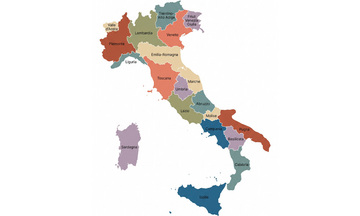
At Lucarelli Italian Restaurant, our Discover Italy series celebrates this extraordinary regional diversity. Italian cuisine is not simply a collection of famous dishes; it is the story of 20 regions shaped by their landscapes, history, ingredients and people.
From Lucarelli Mailbox Birmingham and Lucarelli West Bromwich, we invite you to travel with us through the food and culture of Italy, one region at a time.
Our journey begins high in the Alps, in Italy’s smallest region: Valle d’Aosta—small in size, enormous in character, and surrounded by some of the greatest mountains in Europe.