- Restaurant Locations
- Videos
- Latest News
- Book Now
- Subscribe
- Discover Italy
- Gift Vouchers

Toscana: The Landscape of the Imagination
For many people, Toscana, or Tuscany, is the image of Italy itself: rolling hills, cypress trees, stone farmhouses, vineyards and olive groves bathed in golden light. Yet the region is far more varied, with mountains in the north, a long coastline to the west and islands in the Tyrrhenian Sea.
It is also a region of extraordinary history. Here the Etruscans built their cities, the Renaissance flourished and the Italian language took shape through the works of writers such as Dante, Petrarch and Boccaccio.
Florence: Cradle of the Renaissance
Florence, or Firenze, is the regional capital and one of the great art cities of the world. Under the Medici family, it became the centre of the Renaissance, attracting artists and thinkers such as Leonardo da Vinci, Michelangelo, Botticelli and Brunelleschi, whose great dome still crowns the cathedral.
The Uffizi Gallery, the Ponte Vecchio and Michelangelo’s David draw visitors from every continent. Yet Florence is also a city of markets and trattorias. At the Mercato Centrale and in the streets nearby, Florentines still enjoy lampredotto, a sandwich of slow-cooked tripe, served from small street kiosks.
Siena, Pisa and Lucca
Siena is a medieval city of brick and stone, built around the shell-shaped Piazza del Campo. Twice each summer, on 2 July and 16 August, the square hosts the Palio, a dramatic horse race between the city’s districts, or contrade, which is preceded by days of ceremony and celebration.
Pisa is known worldwide for its leaning tower, part of the beautiful Piazza dei Miracoli. Nearby Lucca is surrounded by intact Renaissance walls, now a tree-lined path where locals walk and cycle. Lucca is also the birthplace of the composer Giacomo Puccini.
The Val d’Orcia and the Tuscan Hills
South of Siena, the Val d’Orcia is one of Italy’s most photographed landscapes, recognised by UNESCO in 2004. Its gentle hills, lines of cypress trees and hilltop towns such as Pienza and Montalcino were shaped by centuries of careful farming.
Further north, San Gimignano rises above the countryside with its medieval towers, while the Chianti hills between Florence and Siena are covered in vineyards, olive groves and woods. Every town has its own market day, festivals and local specialities.
The Coast, the Maremma and the Islands
Toscana’s coastline offers another side of the region. Livorno, a busy port, is famous for cacciucco, a rich fish stew made with several kinds of fish and shellfish. Viareggio is known for its colourful carnival, with giant papier-mâché floats.
In the south, the Maremma is a wilder land of pine forests, marshes and cattle herded by mounted cowboys known as butteri. Off the coast lies the island of Elba, where Napoleon was exiled in 1814, along with other islands of the Tuscan archipelago.
Bread, Beans and Cucina Povera
Tuscan cooking is rooted in cucina povera, the resourceful cooking of country families. Tuscan bread is traditionally made without salt, perhaps because salt was once heavily taxed, and it is the perfect partner for the region’s flavourful cured meats and sauces.
Stale bread is never wasted. It becomes ribollita, a thick soup of beans, cabbage and vegetables; pappa al pomodoro, a soup of bread and tomatoes; and panzanella, a summer salad. Tuscans love beans so much that they are sometimes jokingly called mangiafagioli, bean eaters. Cannellini beans are often cooked slowly with sage and olive oil.
Bistecca, Olive Oil and Sweets
Bistecca alla fiorentina is the region’s most famous meat dish: a thick T-bone steak, traditionally from Chianina cattle, grilled over hot coals and served rare with salt, pepper and olive oil. Tuscan extra virgin olive oil, often green and peppery when freshly pressed, is poured generously over soups, beans and bread.
Tuscan sweets include cantucci, crunchy almond biscuits dipped in vin santo, panforte, a dense cake of nuts, honey and spices from Siena, and ricciarelli, soft almond biscuits. In autumn, castagnaccio, a chestnut flour cake with rosemary and pine nuts, appears in many homes.
Chianti, Brunello and Tuscan Wine
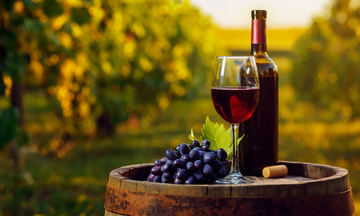
Toscana is one of the world’s great wine regions, and Sangiovese is its principal red grape. Chianti Classico, from the hills between Florence and Siena, carries the symbol of a black rooster. Brunello di Montalcino and Vino Nobile di Montepulciano are among Italy’s most respected reds.
On the coast, Bolgheri became famous for wines made with international grape varieties, often called Super Tuscans. Vernaccia di San Gimignano is the region’s best-known white wine. Wine and olive oil are often made by the same farms, and both remain central to Tuscan life.
Arezzo, Cortona and Montepulciano
In eastern Tuscany, Arezzo is home to a celebrated fresco cycle by Piero della Francesca in the Basilica of San Francesco, and its main square hosts one of Italy’s largest antiques fairs every month. Cortona, on a hill above the Val di Chiana, has Etruscan origins and wonderful views over the plain.
Montepulciano, on a ridge of the southern hills, is known for its Renaissance palaces and for Vino Nobile di Montepulciano, a red wine made mainly from Sangiovese. Its old cellars, cut into the hillside beneath the town, can still be visited today.
Marble, Chestnuts and the Garfagnana
In the north-west, the Apuan Alps rise above the coast, and the quarries of Carrara have produced white marble since Roman times. Michelangelo chose marble from these mountains for some of his sculptures. In the village of Colonnata, lardo is cured for months in marble basins with salt, pepper and herbs.
Inland, the Garfagnana and Lunigiana are valleys of chestnut woods, stone villages and quiet rivers. Chestnut flour was once a staple food here, used for breads, pancakes and the sweet cake known as castagnaccio, and spelt, or farro, from the Garfagnana is still grown on the hillsides.
Tuscan Soups and the Pleasure of Simplicity
Tuscan soups show the skill of making much from little. Ribollita, meaning reboiled, combines bread, cannellini beans, cavolo nero and vegetables, and it is often said to taste better on the second day. Pappa al pomodoro is a thick soup of ripe tomatoes, bread, garlic, basil and olive oil, eaten warm or at room temperature in summer.
Acquacotta, from the Maremma, was originally a simple soup cooked by shepherds and charcoal burners with water, onions, wild greens and stale bread, finished with an egg. Each of these dishes shows the Tuscan respect for bread and for good olive oil.
Toscana: Art, Land and the Table
From the masterpieces of Florence to the simple soups of the countryside, Toscana shows how art and everyday life can sit side by side. Its landscapes, wines and recipes have been shaped by generations of farmers, craftsmen and cooks.
Whether you picture a Renaissance chapel, a hillside vineyard or a bowl of ribollita, Toscana offers a taste of Italy at its most timeless.