- Restaurant Locations
- Videos
- Latest News
- Book Now
- Subscribe
- Discover Italy
- Gift Vouchers

Emilia-Romagna: Between the Po and the Apennines
Stretching from the River Po to the Apennine mountains and the Adriatic Sea, Emilia-Romagna is often described as Italy’s food valley. Its fertile plains, rolling hills and long coastline have produced some of the most famous ingredients in the world, from Parmigiano Reggiano and prosciutto di Parma to balsamic vinegar.
The region is really two historic areas joined together. Emilia, in the west, includes Piacenza, Parma, Reggio Emilia, Modena and Bologna, while Romagna, in the east, looks towards the sea with Ravenna, Forlì, Cesena and Rimini. Linking them is the Via Emilia, a Roman road built in 187 BC that still runs through the heart of the region.
Bologna: Learned, Generous and Red
Bologna, the regional capital, has three traditional nicknames. It is la dotta, the learned, because its university, founded in 1088, is considered the oldest in the Western world. It is la rossa, the red, for the warm colour of its roofs and buildings. And it is la grassa, the fat, for the richness of its cooking.
The city is famous for its porticoes, covered walkways that stretch for many kilometres through the historic centre and were recognised by UNESCO in 2021. Under these arches, people shop, meet and walk in every season. The markets of the Quadrilatero, close to the main square, are full of fresh pasta, cured meats and cheese.
Parma, Modena and Reggio Emilia
Parma is a city of music and fine food. The composer Giuseppe Verdi was born nearby, and the city’s opera house has a demanding audience. Parma is also the home of prosciutto di Parma and gives its name to Parmigiano Reggiano, which is produced across the provinces of Parma, Reggio Emilia, Modena and parts of Bologna and Mantua.
Modena is known for traditional balsamic vinegar, its Romanesque cathedral and its connection with fast cars and great voices: the tenor Luciano Pavarotti was born here. Reggio Emilia has its own place in Italian history, as the Italian tricolour flag was first adopted there in 1797.
Emilia-Romagna is the heartland of fresh egg pasta. Flour and eggs are rolled into a thin golden sheet, the sfoglia, using a long wooden rolling pin. The skill of the sfoglina, the person who rolls the pasta, is passed down through families and still taught in local schools.
From this sheet come many famous shapes. Tagliatelle are traditionally served with ragù, and a recipe for tagliatelle al ragù was deposited with the Bologna Chamber of Commerce in the 1980s to protect the tradition. Tortellini, tiny filled rings, are served in a clear meat broth, while lasagne verdi, made with spinach pasta, is a Bolognese classic.
Other areas have their own specialities: tortelli filled with herbs and ricotta around Parma, cappelletti in Romagna, and passatelli, made from breadcrumbs, eggs and cheese, served in broth.
Cured Meats and Great Cheeses
Alongside prosciutto di Parma, the region produces many celebrated salumi. Mortadella, the large, delicate sausage of Bologna, is flavoured with pepper and sometimes pistachios. Culatello di Zibello, made in the misty lowlands near the Po, is one of Italy’s most prized cured meats. Modena is known for cotechino and zampone, traditionally eaten at New Year with lentils.
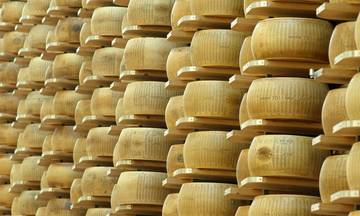
Parmigiano Reggiano is the region’s great cheese, aged for at least twelve months and often much longer. It is grated over pasta, eaten in chunks with a few drops of balsamic vinegar, and its rinds are added to soups for extra flavour.
Romagna and the Adriatic Coast
Romagna has a character of its own: warm, sociable and proud of its traditions. Along the Adriatic, Rimini, Riccione and Cesenatico are among Italy’s best-known seaside resorts, with long sandy beaches and lively summer evenings. The film director Federico Fellini was born in Rimini, and the town appears in many of his films.
Inland, the hills of Romagna are dotted with fortresses and medieval villages such as Brisighella and San Leo, and the tiny independent Republic of San Marino rises on Monte Titano nearby. The food of Romagna includes fish dishes from the coast, hand-rolled strozzapreti and soft squacquerone cheese, often served with figs.
Lambrusco, Sangiovese and the Wines of the Region
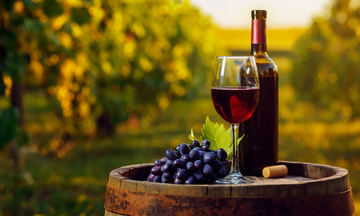
Emilia-Romagna’s best-known wine is Lambrusco, a sparkling red from the area around Modena and Reggio Emilia. Its freshness and gentle bubbles make it an ideal partner for the rich food of the region, cutting through the flavour of cured meats and filled pasta.
In Romagna, Sangiovese di Romagna produces red wines with character, while Albana is a traditional white grape of the hills. In the Colli Piacentini, near Piacenza, wines such as Gutturnio are made. Wine here is rarely served alone; it is made to go with food.
The Motor Valley
Emilia-Romagna is also known as the Motor Valley. Ferrari is based at Maranello, near Modena, while Lamborghini is at Sant’Agata Bolognese, Maserati has its historic home in Modena, and Ducati motorcycles are made in Bologna. The region’s motor racing circuits at Imola and Misano attract enthusiasts from around the world.
This combination of craftsmanship and precision is not so different from the region’s approach to food. In both, quality comes from skill, patience and attention to detail.
Ravenna and Its Mosaics
Ravenna was once the capital of the Western Roman Empire and later an important centre of Byzantine power in Italy. Its early Christian monuments, including the Basilica of San Vitale and the Mausoleum of Galla Placidia, are decorated with shimmering mosaics of gold, blue and green, and they are recognised by UNESCO.
The city is also the resting place of Dante Alighieri, who died there in exile in 1321. Every year, a small oil lamp at his tomb is kept burning with oil sent from Florence, a gesture of reconciliation between the poet and his native city.
Piadina and Romagnolo Hospitality
In Romagna, the piadina is the everyday bread of the people. This thin flatbread, made from flour, lard or olive oil, salt and water, is cooked on a hot terracotta or iron griddle and filled with cured meats, soft squacquerone cheese and rocket. Kiosks along the roads and beaches serve it warm from morning to night.
Romagna is also known for its warm and lively hospitality, which helped the Adriatic coast become one of Italy’s best-known holiday areas. Family-run hotels, beach clubs and small trattorie welcome visitors with generous plates of pasta, grilled fish and local wine.
Emilia-Romagna: The Taste of Italian Tradition
Few regions have given the world as many famous foods as Emilia-Romagna. From the porticoes of Bologna to the cheese dairies of Parma, from the vinegar attics of Modena to the beaches of Rimini, the region shows how a fertile landscape, local skill and centuries of tradition create an extraordinary food culture.
It is a place where people still talk about food with passion, where recipes are protected and where Sunday lunch remains a celebration.